


Three atmospheres follow the rhythm of a day in real life
Colours Beyond 2028+ rests on two drivers: what is real and what is human. The more time we spend on screens, the more we value skill, craftsmanship and the things we can touch.
2028 is the year we return to reality. We learn to switch off our devices, and authenticity, the work of human hands and time become the new luxuries. Colour becomes one of many elements that make our spaces feel real and alive, and we read it through an analogy that makes sense to all of us: Morning, Day and Evening.

Morning
Morning colours are light and low in chromaticness. They bring light and hold nothing but a sense of fresh morning transparency.

Day
Day colours are warm. They are chromatic, but not overly so, and they are not dark: the colours of warm sunlight that makes us active and creative.

Evening
Evening colours have chromaticness similar to that of day colours but are darker, which makes them feel more soothing, elegant and social.
Morning
Morning colours are light and low in chromaticness. They bring light and hold nothing but a sense of fresh morning transparency.
Day
Day colours are warm. They are chromatic, but not overly so, and they are not dark: the colours of warm sunlight that makes us active and creative.
Evening
Evening colours have chromaticness similar to that of day colours but are darker, which makes them feel more soothing, elegant and social.
The day as a spatial sequence
Morning, Day and Evening are more than a metaphor. Each one describes a different kind of space and the way people use it over the course of a real day.
Morning is the threshold, the room you arrive in at first light, which holds little so that the mind can settle. Day is presence, with full daylight and warmth for creating together and among others. Evening brings depth and has two faces, both rooted in what people genuinely do once the working day ends, whether that is time of your own or time to gather in the golden social hour.
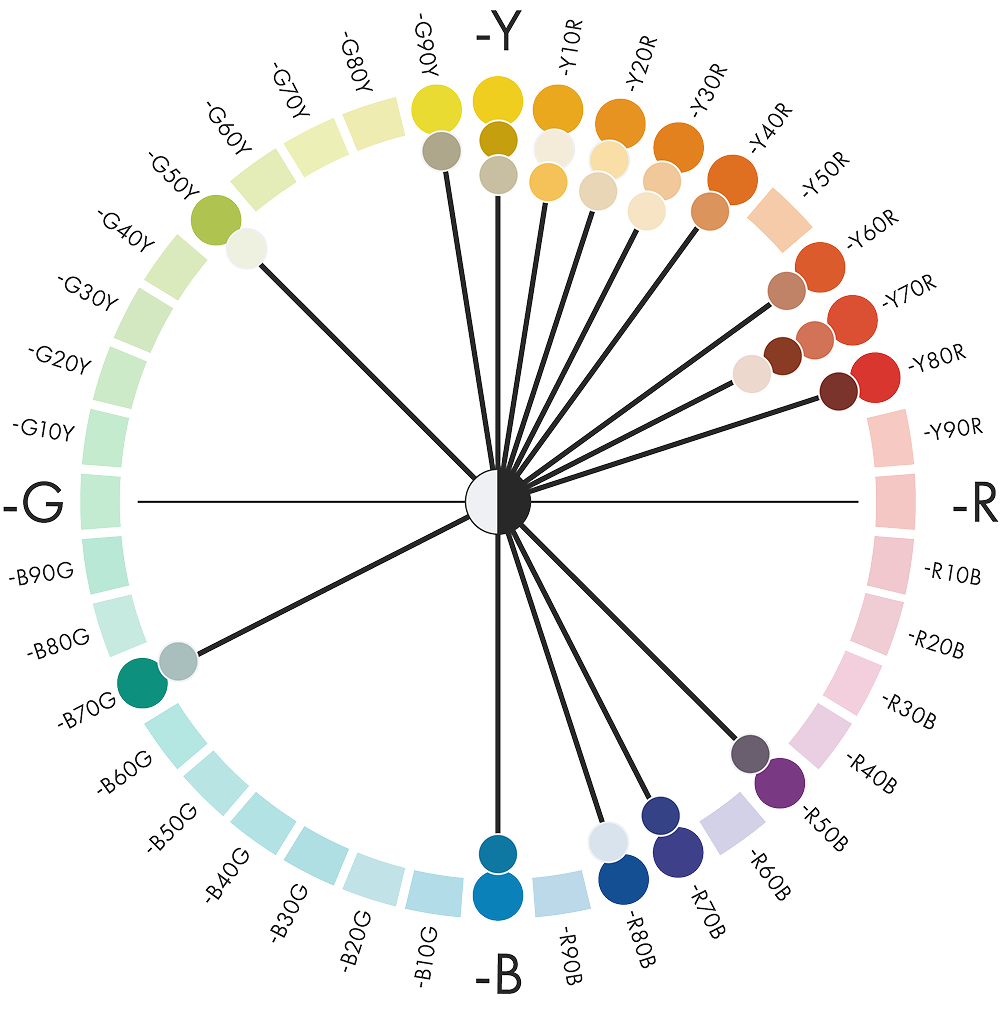
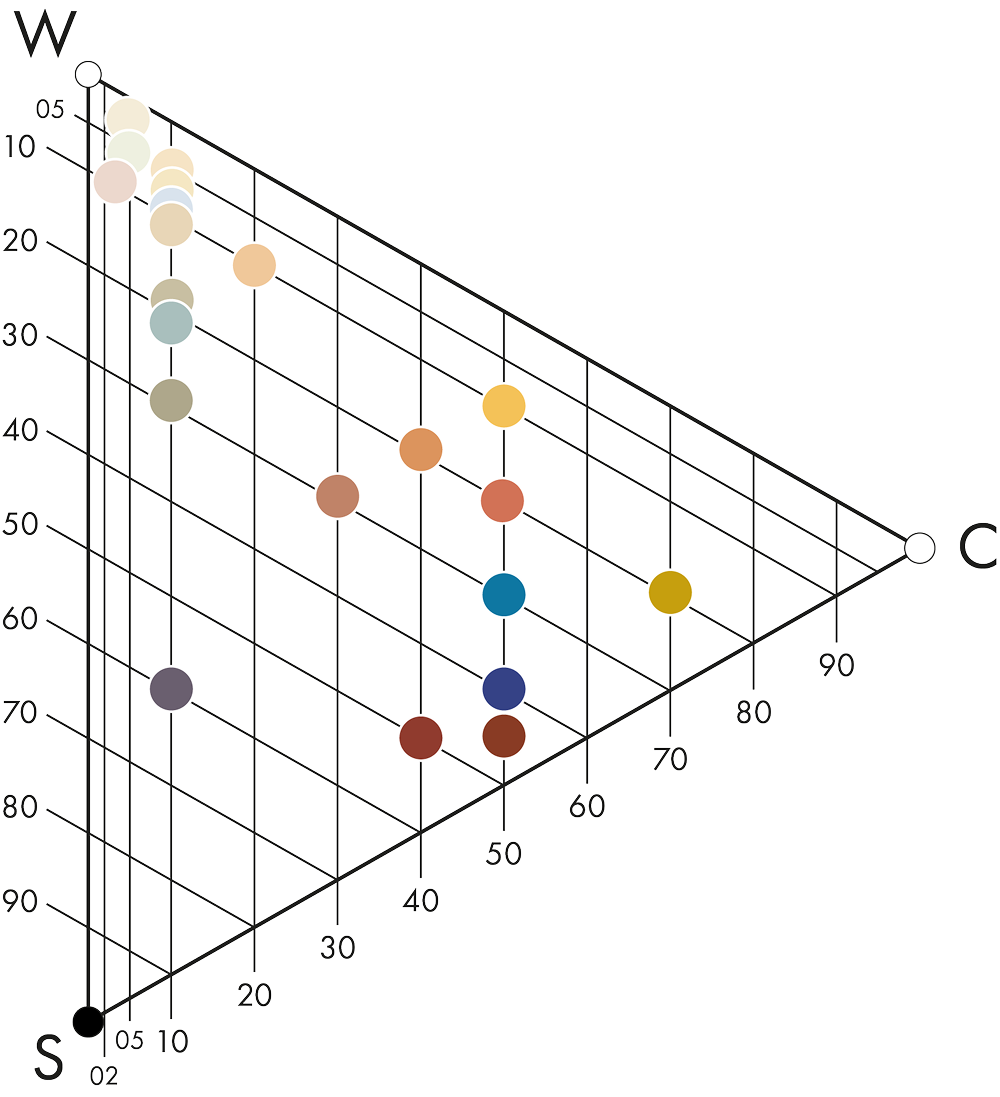
The three colour areas are positioned within the NCS Colour Circle and the NCS Colour Triangle. Morning sits at the light, low-chromatic end, Day in the warm sector between Y10R and Y70R, and Evening in the deeper, chromatic register where blue and red-brown carry the blackness. This positioning shows how each area is defined by its hue direction and nuance structure, following the light of a single day.
From each colour area, three 60–30–10 combinations of a main, secondary and accent colour are developed. The colour area defines the underlying logic and mood; the combinations show how that logic translates into interiors, materials and product contexts. Together, they demonstrate how atmosphere is created through proportion, nuance and use, rather than through single colours in isolation.
Work with the colours of tomorrow
Explore the Colours Beyond 2028+ palettes in NCS+, test combinations and export NCS notations for your projects. Built for architects, designers and CMF professionals.


Stay connected to colour insights
Be the first to know about new collections, exclusive offers and industry trends.
NCS Design Tools


