
The history of NCS Colour
Celebrating 80 years
NCS Colour was founded in 1945, marking eight decades of innovation in colour communication.
Over the years, the NCS System has become a fundamental tool in colour communication. Developed by scientists, the system was created to meet the need for a reliable and practical way to define and reproduce colours the way humans perceive them. Today, the NCS System is used globally in design, architecture, coatings and manufacturing industry, setting the standard for colour communication with its accuracy and ease of use. From its early beginnings, the NCS System has grown into a central part of the modern colour world.
Die Erforschung des Natural Farbsystem in den 1920er-Jahren
- Begründer: Farbe-Forscher Anders Hård, Psychologe Lars Sivik und Physiker Gunnar Tonnquist.
- Grundlage: Das einzige Farbsystem, das auf der menschlichen Wahrnehmung von Farbe basiert.
Gründung des Unternehmens NCS Colour im Jahr 1945
- Gründungsjahr: 1945 als T. Palmer AB
- 2010: Wurde zu NCS Colour
Markteinführung des NCS Systems im Jahr 1979
- Einführung des NCS Systems: 1979 mit dem ursprünglichen NCS-Atlas, einschließlich 1,450 NCS-Standardfarben.
- NCS-Standardfarben heute: 2,050

Early Initiatives in Swedish Colour Research
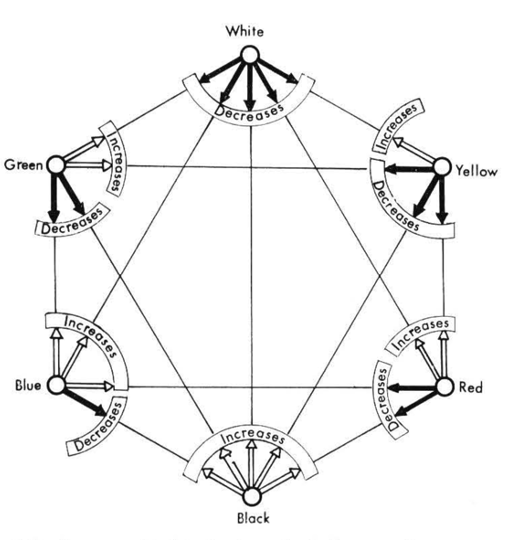
In the 1920s, Swedish researchers set out to create a system grounded in how humans actually perceive colour, rather than how pigments are mixed. Under the leadership of Professor Sven Hesselgren, PhD, a network of international scientists investigated colour relationships, building on Ewald Hering’s opponent-process theory of vision. This work explored the perceptual dimensions of hue, blackness, and chromaticness, aiming for a logical, universally understandable framework for colour description.
The Swedish Society of Crafts and Design (today Svensk Form) began educating the public on colour use in the early 1930s, as advances in manufacturing expanded the available palette. The combination of technological progress and industrial demand intensified the need for a reliable, perception-based colour standard.
Tryggve Johansson und Sven Hesselgren: Pioniere des Natural Farbsystem
Ende der 1930er-Jahre wandte der schwedische Arzt und Farbe-Forscher Tryggve Johansson Herings Theorie auf die systematische Beschreibung von Farbe an und entwickelte 1937 die konzeptionelle Grundlage für das Natural Farbsystem. In enger Zusammenarbeit mit Hesselgren verband er Wahrnehmungstheorie mit colorimetrischer Prüfung, um ein wissenschaftlich fundiertes und zugleich praktisches Modell zu schaffen. Ihr gemeinsames Ziel war es, die Lücke zwischen der menschlichen Farbe-Wahrnehmung und den Anforderungen von Design, Architektur und Fertigung zu schließen. Dieses Prinzip steht bis heute im Mittelpunkt von NCS Colour.

Entstehung der ersten Farbe-Mustersammlung
Torsten Palmer, schwedischer Farbe-Forscher und später Mitgründer der Swedish Farbe Centre Foundation, und Anders Sjögren, ein Pionier der industriellen Produktion von Farbe, schufen gemeinsam mit Hesselgren und Johansson 1938 die erste kommerzielle, produktunabhängige Farbe-Kartensammlung mit 285 Farben: die Hesselgren & Sjögren Farbe Sample Collection.
Early Initiatives in Swedish Colour Research
In the 1920s, Swedish researchers set out to create a system grounded in how humans actually perceive colour, rather than how pigments are mixed. Under the leadership of Professor Sven Hesselgren, PhD, a network of international scientists investigated colour relationships, building on Ewald Hering’s opponent-process theory of vision. This work explored the perceptual dimensions of hue, blackness, and chromaticness, aiming for a logical, universally understandable framework for colour description.
The Swedish Society of Crafts and Design (today Svensk Form) began educating the public on colour use in the early 1930s, as advances in manufacturing expanded the available palette. The combination of technological progress and industrial demand intensified the need for a reliable, perception-based colour standard.
Tryggve Johansson und Sven Hesselgren: Pioniere des Natural Farbsystem
Ende der 1930er-Jahre wandte der schwedische Arzt und Farbe-Forscher Tryggve Johansson Herings Theorie auf die systematische Beschreibung von Farbe an und entwickelte 1937 die konzeptionelle Grundlage für das Natural Farbsystem. In enger Zusammenarbeit mit Hesselgren verband er Wahrnehmungstheorie mit colorimetrischer Prüfung, um ein wissenschaftlich fundiertes und zugleich praktisches Modell zu schaffen. Ihr gemeinsames Ziel war es, die Lücke zwischen der menschlichen Farbe-Wahrnehmung und den Anforderungen von Design, Architektur und Fertigung zu schließen. Dieses Prinzip steht bis heute im Mittelpunkt von NCS Colour.
Entstehung der ersten Farbe-Mustersammlung
Torsten Palmer, schwedischer Farbe-Forscher und später Mitgründer der Swedish Farbe Centre Foundation, und Anders Sjögren, ein Pionier der industriellen Produktion von Farbe, schufen gemeinsam mit Hesselgren und Johansson 1938 die erste kommerzielle, produktunabhängige Farbe-Kartensammlung mit 285 Farben: die Hesselgren & Sjögren Farbe Sample Collection.


"Die einzig wirklich richtige Definition von Farbe: Farbe ist das, was wir als Farbe sehen. Farben entstehen in der Psyche, in dem Moment, in dem wir sie wahrnehmen, und solange wir sie betrachten. In der Farbwissenschaft ist es wichtig, zwischen ihnen zu unterscheiden.“ physische Farbe (Physik) und Wahrnehmungsfarbe (Psychologie), was wir als Farbe sehen.“
– Lars Sivik, 1965, Mitbegründer des NCS – Natural Colour System®
"Die einzig wirklich richtige Definition von Farbe: Farbe ist das, was wir als Farbe sehen. Farben entstehen in der Psyche, in dem Moment, in dem wir sie wahrnehmen, und solange wir sie betrachten. In der Farbwissenschaft ist es wichtig, zwischen ihnen zu unterscheiden.“ physische Farbe (Physik) und Wahrnehmungsfarbe (Psychologie), was wir als Farbe sehen.“
– Lars Sivik, 1965, Mitbegründer des NCS – Natural Colour System®


The founding of NCS Colour in 1945
Making the Natural Colour System commercially available was an important step towards enabling universal colour communication. In 1945, the company that would later be renamed NCS Colour was founded.
As colour became increasingly available and important in daily life during the 1950s and 1960s, the demand for both research and education grew in parallel. Scientific study provided the knowledge base, while education ensured that designers, architects, and industry professionals could apply this knowledge in practice.
The founding of NCS Colour in 1945
Making the Natural Colour System commercially available was an important step towards enabling universal colour communication. In 1945, the company that would later be renamed NCS Colour was founded.
As colour became increasingly available and important in daily life during the 1950s and 1960s, the demand for both research and education grew in parallel. Scientific study provided the knowledge base, while education ensured that designers, architects, and industry professionals could apply this knowledge in practice.
The first colour reference tool
When the NCS System launched in 1979 with the now-iconic NCS Atlas, it marked a breakthrough: the first and only colour system based entirely on how humans perceive colour.
The long and rigorous research approach ensured that the NCS System could act as a reproducible and universally understood “language of colour” across materials, industries, and cultural contexts.
The first NCS Atlas was a complete, perception-based colour system, presented in a collection of 1,412 precisely defined standard colours, ready for consistent application in design, architecture, manufacturing, and education.
Educating Colour
During the 1950s, the Colour in the Home initiative, developed with IKEA, led Hesselgren and Johansson to create a dedicated colour department. This department launched one of the first commercial colour schools and educational programmes, involving up to 20 designers, and laid the foundations for modern colour expertise.
These early educational activities evolved directly from the same research traditions that drove the development of the Natural Colour System. They became the backbone of what is now the NCS Colour Academy, where the principles discovered through decades of research are still taught and applied worldwide.
Two decades of research and innovation
In the 1960s, the Swedish Colour Centre Foundation set out to transform the Natural Colour System from a theoretical model into a scientifically validated standard. The research was led by Anders Hård (colour researcher), Lars Sivik (psychologist), and Gunnar Tonnquist (physicist).
Together, they combined expertise in perception, physics, and colour measurement to conduct extensive psychophysical experiments, analysing tens of thousands of visual assessments to precisely define the system’s parameters. Nearly two decades of research and refinement resulted in the practical application on the Natural Colour system.
Launching the NCS System in 1979
It must be possible to produce the same colour on different products from different manufacturers. Producing the exact colour is crucial, as it can be for anything from the colour of emergency exit signs to the colour of medical needles to the colour of our Swedish flag. What these examples have in common is that the colour must be the same regardless of manufacturer for people to recognise them. This is made possible by national and international standards that authorities and industries mutually agree on and that describe the colours precisely (SIS, ISO, CEN and CIE are some of the most important standardisation organisations).
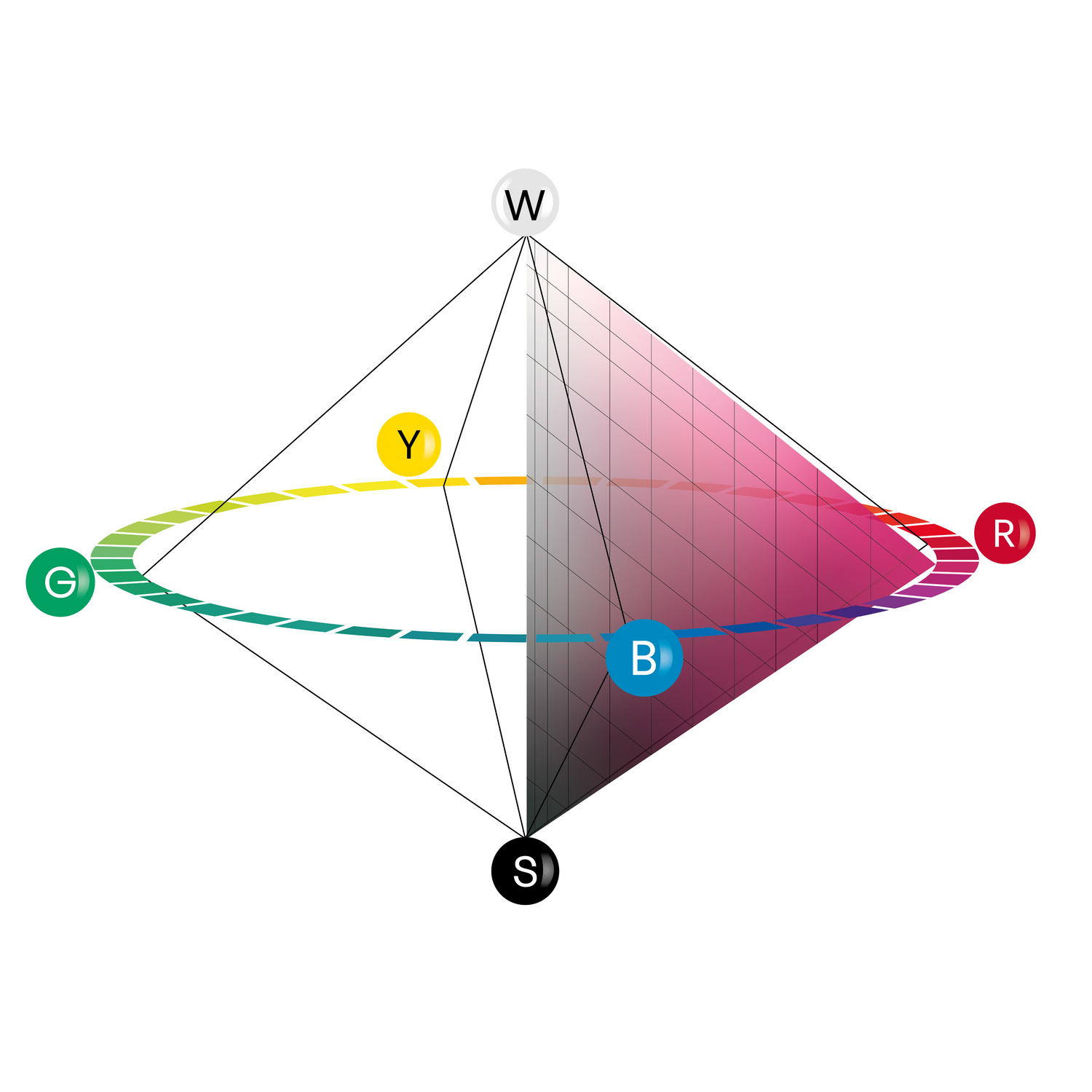
To make colour decisions we must be able to accurately define and communicate colours, so that we can ensure that produced colours match the intended colours. To do this, we must understand how we perceive colour. When the NCS System was launched in 1979, it was a scientifically based colour notation system based on how we perceive colour visually. It allows us to define all colour perceivable by humans, making it possible to define and communicate colour in a revolutionising way that ensures accurate results.
The NCS System adopted as an international standard in multiple markets
NCS is a standardised colour communication system with accurate colour notations and colour samples that provides the industry with the tools they need to always produce the right colour. The NCS System and its colour samples are standardised in Sweden and multiple other countries. Furthermore, the NCS Notations are used in countless standards and instructions worldwide for accurate colour specification.
- ASTM International (USA); Standard Practice for Specifying Color by the Natural Farbsystem (NCS) (ASTM E2970)
- Schweden; NCS Farbatlas (SS 19102), Farbbenennungssystem (SS 19100) und NCS-Farbproben - Betrachtungs- und Messbedingungen sowie Toleranzen (SS 19104)
- Norwegen; NCS Farbatlas (NS-SS 19102)
- Spanien; Colores normalizados (UNE 48103)
- Südafrika; Nationaler Farbe-Standard (SANS 1091)
Die Entwicklung der Standardfarben des NCS-Standards
Die NCS Colour-Muster sind mehr als Referenzen, sie sind präzise kalibrierte Werkzeuge. Jede Farbe wird unter mehreren Lichtbedingungen geprüft und mit engen Toleranzen definiert, damit sie sich über Materialien, Formate und Branchen hinweg zuverlässig reproduzieren lässt.
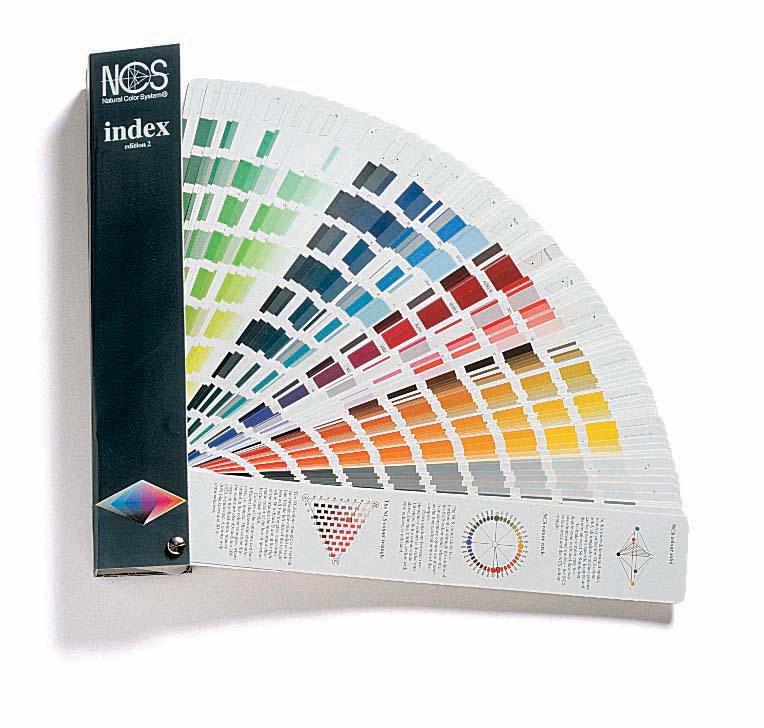
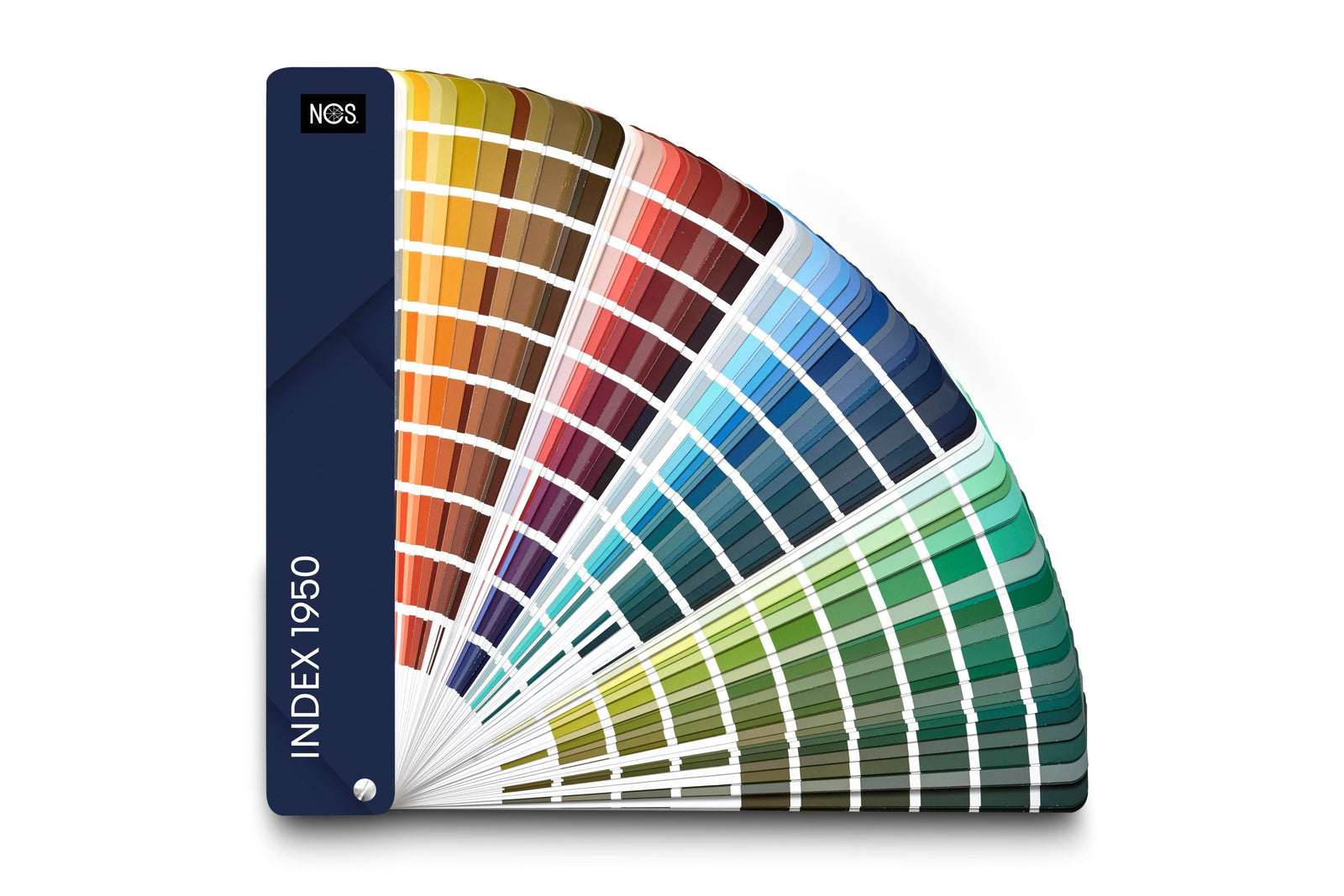
Im Zuge der weiteren Forschung wurde die Auswahl standardisierter Farben überarbeitet und erweitert. Um Fachleute besser zu unterstützen, hat NCS sein Farbe-Angebot fortlaufend erweitert und seine Designwerkzeuge verbessert, um relevantere Standardfarben aufzunehmen. Diese Ergänzungen sind stets marktorientiert und werden in enger Zusammenarbeit mit der Industrie entwickelt. Mit der Einführung des NCS Index im Jahr 1982 wurde der gesamte Farbe-Bereich so zugänglich wie nie zuvor und bot ein tragbares Farbfächer-Format, das sich rasch zu einem der beliebtesten und am weitesten verbreiteten NCS-Werkzeuge entwickelte.
1,750 Standard Collection
Die zweite Ausgabe der standardisierten NCS Farbe-Muster wurde 1995 eingeführt und umfasste 1.750 Farben. Diese Ausgabe brachte eine weltweit führende Farbe-Genauigkeit und -Konsistenz mit sich, die bis heute einzigartig ist, und führte eine unerreichte Farbe-Genauigkeit und -Konsistenz ein. Die Muster sind mit einem „S“ wie in standard Farbe vor den NCS-Notationen gekennzeichnet. Sie basierte zudem auf umweltverträglich zugelassenen Pigmenten gemäß den EU-Vorschriften.
1.950 Standard Collection
2004 kamen 200 neue Farben hinzu, davon 184 Hell Farben und 16 im Blau-Grün-Bereich. Damit wurde die NCS Standard Collection auf 1.950 Farben erweitert.
2.050 Standard Collection
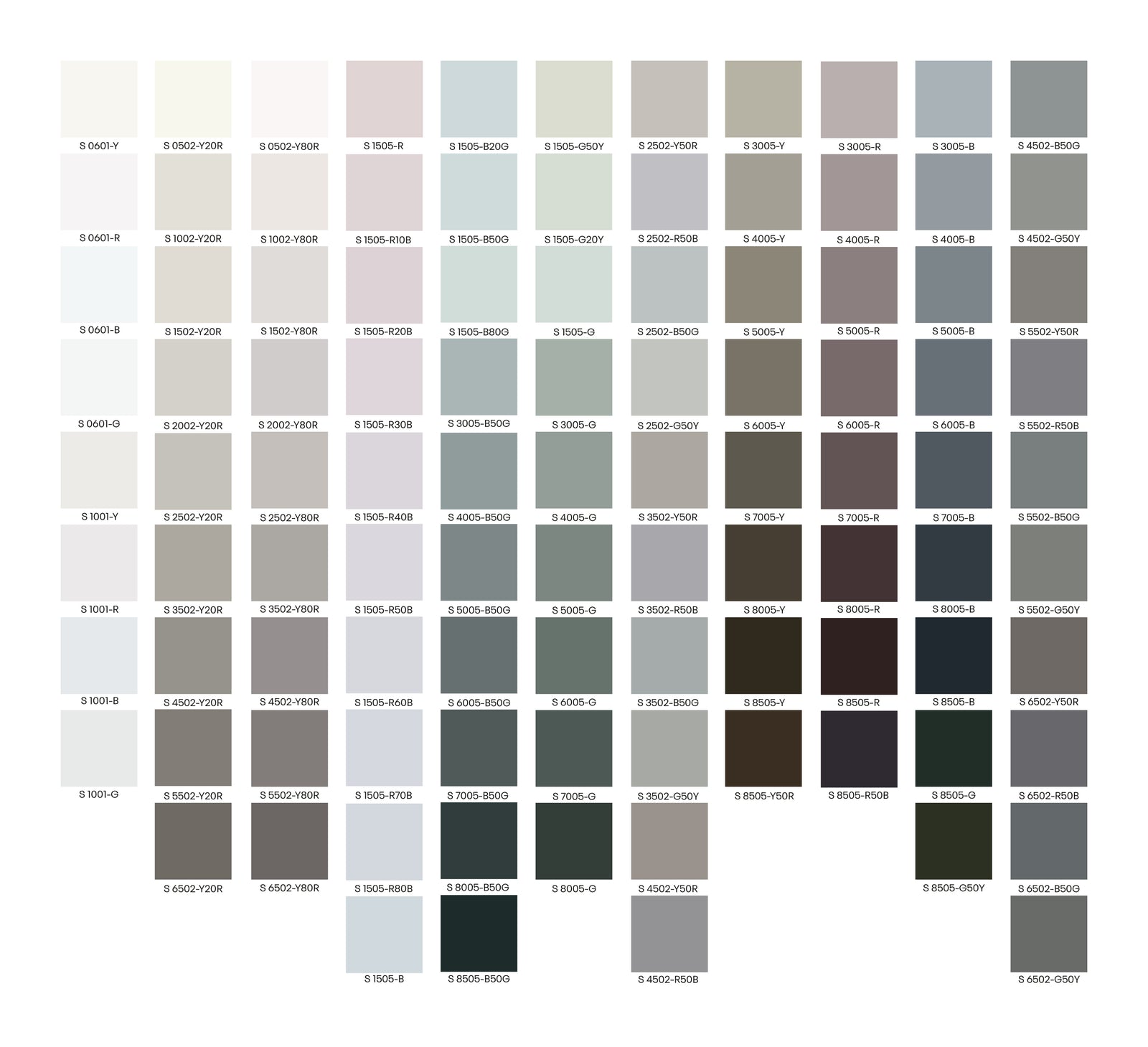
Das letzte Update erfolgte 2022, als die NCS Standard Collection um 100 neue Standardfarben erweitert wurde und das Sortiment von 1.950 auf 2.050 Standardfarben anwuchs. Der Schwerpunkt dieser Ergänzungen lag auf dem niedrig-Bunt Farbe Spektrum, um die Farbe-Auswahl zu erleichtern, insbesondere für Weiß- und Greige-Töne.
Mehr von NCSs 80-jährigem Jubiläum
Entdecken Sie die Jubiläumsfeier Together in Farbe, bei der Stimmen führender Unternehmen aus verschiedenen Branchen zusammenkommen und zeigen, auf welch vielfältige Weise Farbe Wirkung entfaltet und Strategie, Innovation und Kreativität vorantreibt.